

Corporate governance plays a critical role in shaping organizational effectiveness, accountability, and long-term value creation. In Ibero-American contexts, governance challenges are influenced by distinctive ownership structures, family-controlled firms, institutional development, board diversity, and evolving sustainability expectations. This track welcomes theoretical and empirical research that advances our understanding of governance mechanisms, board dynamics, stakeholder relations, executive decision-making, and their impact on organizational performance and societal outcomes. The track aims to foster dialogue on how governance practices can contribute to responsible, inclusive, and sustainable business development across the region.
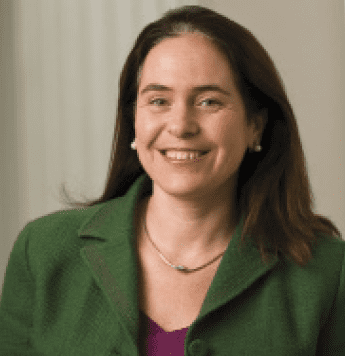
Ruth V. Aguilera (Northeastern University) is a highly respected and influential scholar in strategic management, international business, and corporate governance. She is widely recognized for her work on how institutional contexts shape firms’ behaviors—particularly regarding governance, corporate social responsibility and globalization.
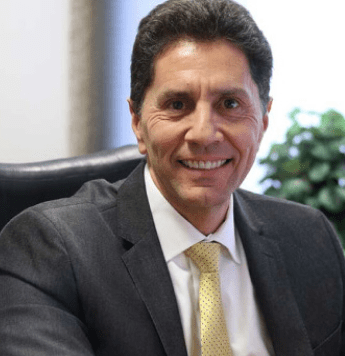
Herman Aguinis (George Washington University) is respected for producing research that is simultaneously rigorous, methodologically innovative, and practically relevant. His scholarship has shaped how organizations design performance systems, how researchers conduct empirical studies, and how institutions understand governance, corporate social responsibility, and talent strategy.

Sharon Alvarez (University of Pittsburgh) is a leading academic in the fields of entrepreneurship theory, strategic management, and organizational studies. She is best known for her work on opportunity creation theory, which argues that entrepreneurial opportunities can be created through human action—not only discovered in existing environments. This perspective has significantly shaped contemporary debates in entrepreneurship research.
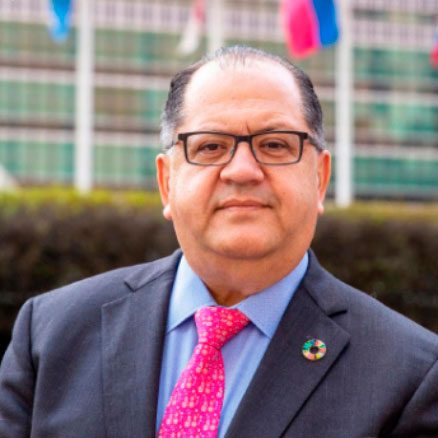
Luis Felipe López-Calva is a distinguished economist and a leading expert in poverty, inequality, inclusive growth, and development economics. He currently serves as the Global Director for Poverty and Equity at the World Bank.

This track highlights the central role of people—managers, employees, communities,
and leaders—in shaping the progress and competitiveness of the Ibero American
region. Submissions may examine topics such as talent development, education,
leadership, migration, cultural values, and human capital formation. By understanding
how individual and collective capabilities support organizational effectiveness and
regional advancement, this track emphasizes the importance of human development
as a driver of sustainable social and economic transformation.

This track addresses the complex environmental, social, and economic challenges faced
by organizations operating in Ibero-America. Scholars are invited to explore how firms
respond to issues such as climate change, inequality, resource scarcity, macroeconomic
volatility, and community development pressures. Research examining corporate
sustainability strategies, social innovation, public-private partnerships, and the pursuit
of inclusive growth will contribute to understanding how organizations in the region
can pursue long-term resilience while generating positive societal impact.

This track examines how academic research can meaningfully inform managerial practice
and support evidence-based decision-making in Ibero-American organizations. It
invites submissions that bridge theory and practice, offering insights into how research
findings can be effectively transferred to firms, policymakers, and communities. Topics
may include mechanisms for knowledge dissemination, collaborations between
scholars and practitioners, and the measurable impact of research on organizational
performance, public policy, and economic development.

This track focuses on the interplay between entrepreneurial activity and the networks
that enable business creation and growth within Ibero America. Given the diversity
of economic conditions and institutional frameworks across the region, networks—
formal and informal—play an essential role in facilitating access to resources,
knowledge, and opportunities. Submissions are encouraged to investigate how
entrepreneurs navigate these ecosystems, how social and professional ties influence
entrepreneurial outcomes, and how regional dynamics stimulate or constrain new
venture creation and scaling.

This track explores the distinctive characteristics, behaviors, and evolution of family enterprises across Ibero America, a region where family-owned firms play a dominant economic and social role. Scholars are invited to examine how cultural values, institutional environments, governance structures, and succession processes shape the long-term sustainability and competitiveness of these organizations. By analyzing the strategic, emotional, and relational dynamics embedded in family firms, this track aims to deepen understanding of how these enterprises innovate, adapt, and contribute to regional development.
Es director de la Maestría Full Time MBA (MEDE) y profesor del área de Factor Humano. Licenciado en Teología Moral por la Pontificia Università della Santa Croce (Roma, Italia) y en Dirección de Empresas, Universitat de Barcelona (España). Posee un Máster en Dirección de Empresas (MEDEX) por IPADE. Doctor en Ciencias Económicas y Sociales, Universitat Internacional de Catalunya (Barcelona). Realizó una estancia postdoctoral en el área de Ética Empresarial en IESE Business School.
Fungió como director de Programas Executive Education en IESE Business School, como director del Programa Executive MBA (MEDEX), director del Inclusive Growth Summit, IPADE Business School así como de diferentes asociaciones para la formación integral de universitarios y bachilleres en Barcelona, España. Miembro del MCE Project, Pontificia Università della Santa Croce, Roma, Italia.
Artículos Académicos
Capítulos de libros