

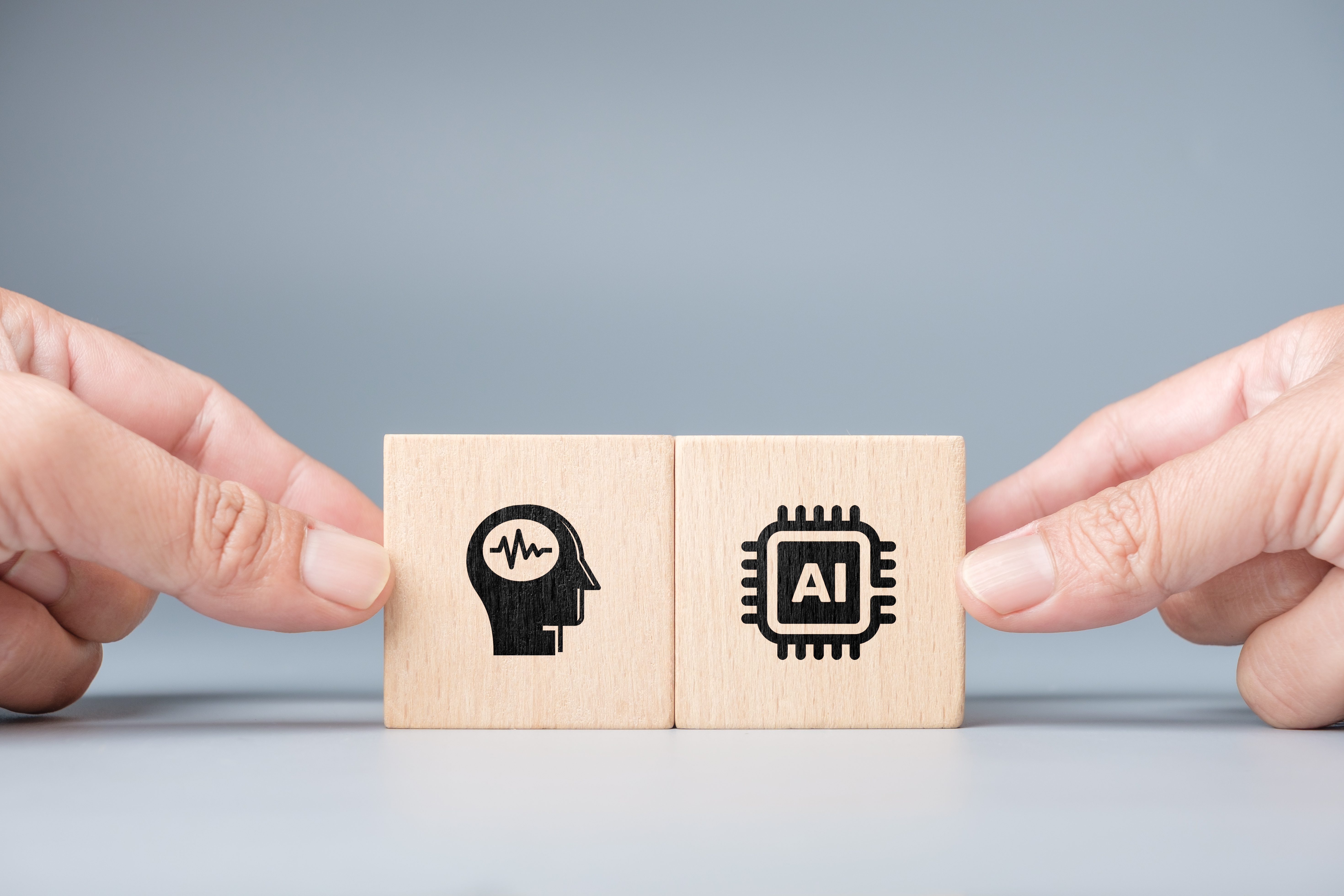
Despite the differences across fields, the principle is the same: AI must augment what is human, not replace it. Human Augmentation does not seek to delegate thinking, but to enhance it. As human beings, communication, language, and judgment go beyond words. They cannot be replaced by technology.
The rapid expansion of generative artificial intelligence (GAI) has simultaneously transformed four fundamental domains: academia, industry, technology consulting, and the media.
In the face of this revolution, one concept is beginning to consolidate as a point of reference for leaders and organizations: Human Augmentation—the vision that understands AI as a tool to expand and strengthen human capabilities.
What are its implications across these fields?
- Academic: educating leaders capable of thinking with and about AI
In education, AI is not an adversary but an opportunity to strengthen critical thinking. Closed models such as ChatGPT Edu already exist in this space, allowing us to work with sensitive information without compromising data or intellectual property.
AI facilitates auxiliary tasks—initial ideation, drafting, translation, and synthesis—but analysis, judgment, and interpretation remain human responsibilities. As educators, we are responsible for teaching the proper use of these tools to prevent unethical use and to ensure that, rather than limiting participants’ (students’) abilities, AI enhances them.
- Industry and Technical Sectors: efficiency without abandoning judgment
In industrial and technical settings, AI adoption is advancing rapidly. From manufacturing to financial services, companies use generative models to automate parts of analysis, accelerate reporting, and optimize processes. However, the industry faces a critical risk: the indiscriminate use of open AI. Uploading internal documents, financial statements, or diagnostics to public platforms can expose information that may later be used to train models without control.
For this reason, transitioning to closed, secure, and auditable models will become a competitive advantage for firms that adopt responsible policies now.
- Technology and Consulting: where generative models fall short
AI does make it possible to reduce operational workload, automate analysis, and multiply the productivity of small teams. Yet it cannot replicate the primary competitive advantage of a global consulting firm: accumulated market knowledge.
The learning derived from working with dozens of companies across multiple sectors cannot be generated by a generative model alone. AI can help a small firm become more efficient, but it cannot replace the strategic experience that only comes from years of real interaction with clients and diverse contexts.
Recent mistakes—such as corporate reports generated entirely by AI without human review—reveal that the problem is not the technology itself, but the absence of digital governance. Without validation processes, an automated decision can have severe operational and reputational consequences.
- Media and Ethics: the risk of the infodemic
The media operate in a particularly delicate territory. Many already use AI to draft quick news items, summaries, and headlines. Without clear protocols, this practice can lead to false information, model “hallucinations,” and incorrect citations. Speed cannot take precedence over accuracy.
This phenomenon fuels what specialists call an infodemic: the saturation of false or imprecise content that makes it difficult to distinguish between reliable information and misinformation. In an environment where trust is a media outlet’s core asset, implementing ethical AI-use policies is not optional—it is the very foundation of credibility.
Human Augmentation applied to media means that journalists use AI as an assistant to accelerate processes while maintaining editorial control, fact-checking, and journalistic judgment.
The human being at the center as the unifying principle
Despite the differences among academia, industry, consulting, and media, the principle is the same: AI must augment the human, not replace it.
Human Augmentation does not seek to delegate thinking, but to enhance it. We must keep in mind that, as humans, we are psychobiosocial beings, and that communication and language go beyond words. Looking someone in the eye and speaking face-to-face, empathy, ethics, judgment, and the ability to interpret context are elements that technology cannot replace.
Article originally published at: https://revistafortuna.com.mx/2025/12/19/human-augmentation-la-ia-aplicada-en-la-academia-industria-consultoria-y-en-los-medios/